

Editor’s Note: This article was originally published by TheGuardian
As the global energy landscape undergoes a seismic shift, Tanzania, is emerging as a primary driver of the renewable revolution in East Africa.
The Renewable Capacity Statistics 2026 report by the International Renewable Energy Agency (IRENA) shows that Tanzania has more than quadrupled its renewable energy footprint over the past decade, marking a decisive move away from traditional fossil-based power structures.
Tanzania’s renewable energy journey has been largely powered by hydropower. In 2016, the country’s hydropower capacity stood at 587 MW.
By 2025, this had surged to 2,797 MW—outpacing regional peers such as Kenya (893 MW), Uganda (1,718 MW), and Rwanda (134 MW).
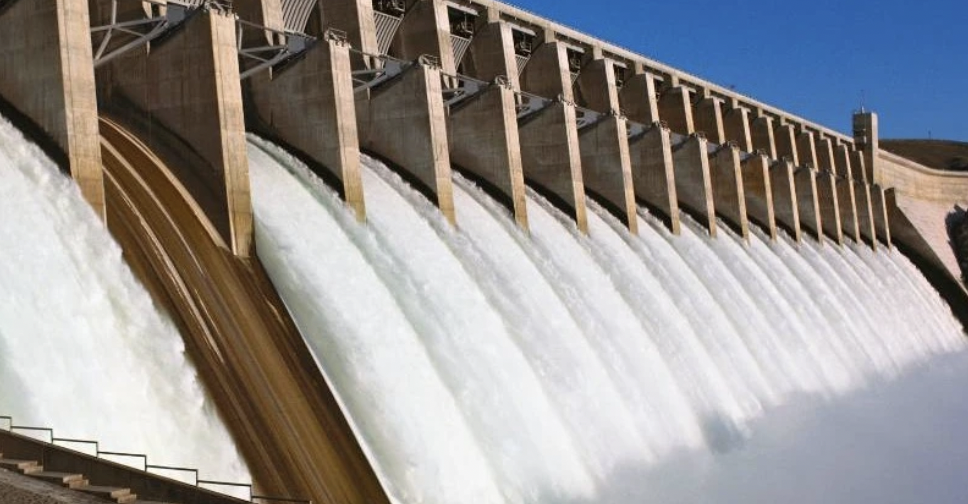
Large-scale projects, including the Julius Nyerere Hydropower Plant, have provided a robust backbone for the grid, supporting both domestic demand and regional power trade.
While hydropower dominates, Tanzania is actively expanding its energy mix. Solar energy, though still modest, grew from 9 MW in 2016 to 12 MW by 2025, reflecting early but steady adoption.
Wind energy, however, remains a challenge, with only 2 MW installed, lagging behind Kenya’s 436 MW. Bio-energy capacity has seen slight growth, reaching 70 MW in 2025, alongside 1 MW of gas biofuel.
A standout feature of Tanzania’s green energy strategy is its focus on off-grid solutions. Total off-grid renewable capacity increased from 52.7 MW in 2016 to 63.2 MW in 2025, while off-grid hydropower grew from 20.3 MW to 24.9 MW.
These systems, particularly solar PV installations, are extending electricity to remote communities beyond the reach of the national grid—underscoring Tanzania’s commitment to inclusive energy access.
The overall renewable share of electricity capacity has risen sharply, from 44.7 percent in 2016 to 69.2 percent in 2025. This reflects not only significant infrastructure investment but also policy frameworks aimed at diversifying and modernizing the energy sector.
For Tanzania, the data tells a story of a nation punching above its weight. By balancing massive hydropower projects with localized solar innovation, the country is crafting a blueprint for sustainable development that other East African nations can emulate.
While the global race toward a greener energy future is far from over, Tanzania has firmly positioned itself in the lead pack of Africa’s energy transition.
Its journey of renewable energy from 664 MW in 2016 to nearly 2,880 MW in 2025 exemplifies what is possible when policy ambition meets practical implementation—a lesson for the region and the continent at large.
Tanzania’s achievements mirror a broader African energy awakening.
In 2025, the continent recorded its highest annual renewable capacity increase in history, a 15.9 percent jump that brought total capacity to 82,371 MW. Solar capacity alone has expanded eight-fold since 2016, while wind power has tripled.
Yet, Africa’s progress also highlights the global energy divide. Despite record growth, the continent accounted for only 1.6 percent of global new renewable installations in 2025. The bulk of renewable expansion remains concentrated in China, Europe, and the United States.
IRENA Director-General Francesco La Camera emphasized the importance of addressing this disparity. “The resilience of renewable power continues to push additions to new records,” he said. “But the global disparity in investment remains a critical challenge.”
By the end of 2025, renewables made up 49 percent of total global installed power capacity and 85.6 percent of annual power additions, driven primarily by solar and wind.
“Yet, as we draw closer to a world in which renewable energy accounts for half of total capacity, many energy planning questions still need to be addressed to establish renewables as the most significant source of electricity generation, including in the context of grid flexibility and adaptation to variable renewable power,” he said.