
Editor’s Note: This article was originally published by STREAMLINEFEED
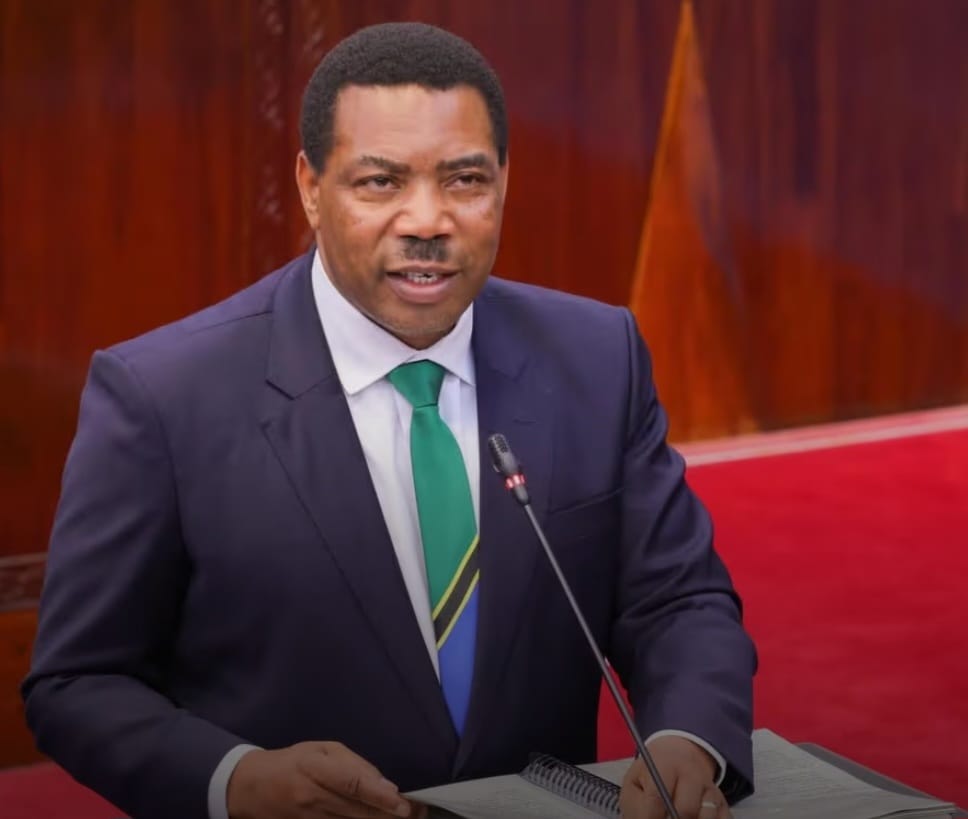
DODOMA: PRIME Minister Dr Mwigulu Nchemba has assured the National Assembly that the 42 billion US dollar (over 100tri/-) LNG megaproject is on track.
Tanzania is on the precipice of its most significant economic transformation in history, with the $42 billion (approximately KES 5.6 trillion) Liquefied Natural Gas project moving into its final negotiation phase. Prime Minister Dr. Mwigulu Nchemba has formally signaled to the National Assembly that the government is in the closing stages of securing the Host Government Agreement, a milestone expected by mid-2026.
This massive industrial initiative, a joint venture involving global energy giants Shell, Equinor, ExxonMobil, Pavilion Energy, and Medco Energi, alongside the state-owned Tanzania Petroleum Development Corporation (TPDC), aims to monetize over 47.13 trillion cubic feet of offshore natural gas. For a nation positioning itself as an emerging energy hub for East Africa, the stakes are not merely commercial they represent a fundamental pivot in the region’s energy security and industrialization strategy, potentially shifting the geopolitical balance of the continent’s energy exports.
The Domestic Consumption Pivot
Historically, the LNG project was envisioned primarily as an export vehicle to feed the energy-hungry markets of Asia and Europe. However, government strategy has evolved significantly. Prime Minister Nchemba confirmed that the administration is now mandating that at least three percent of all extracted gas be ring-fenced for domestic consumption. This policy shift reflects a growing realization that natural gas must act as a foundational input for Tanzania’s internal industrial growth—powering factories, cement manufacturing, and agricultural processing plants—rather than functioning solely as a foreign exchange earner.
The implications of this shift are profound for the local economy. Currently, Tanzania relies heavily on hydropower, which has shown increasing vulnerability to climate-induced droughts. By integrating significant volumes of natural gas into the domestic grid, the government aims to reduce its reliance on biomass and charcoal, which still account for the vast majority of household energy consumption. This transition is not only an economic imperative but also a public health and environmental priority, promising to curtail the widespread deforestation driven by charcoal production.
Economic Stakes and Regional Rivalry
The $42 billion price tag cements this as the largest planned investment in the nation’s history. For regional observers and investors in Nairobi, this project serves as a stark reminder of the intensifying competition for foreign direct investment (FDI) in East Africa. As Tanzania builds out its offshore infrastructure, it is positioning itself to complement—and perhaps eventually challenge—Mozambique’s established position as a key regional LNG player.
Economists at the Central Bank of Tanzania suggest that the multiplier effects of the project could be transformative. Beyond the capital expenditure required for the construction of the terminal and processing facilities, the development of the supply chain—from local logistics companies to specialized maritime support services—will likely inject billions into the Tanzanian economy. However, the government remains cautious. The collapse of previous negotiations in 2023 serves as a cautionary tale officials are now prioritizing meticulous legal and fiscal frameworks over speed, ensuring that the revenue share, tax base, and local content requirements are ironclad before a single shovel hits the ground.
The Road to Final Investment Decision
Despite the optimism, the path to the Final Investment Decision (FID) remains laden with complexity. The project involves coordinating a diverse consortium of international partners, each with their own risk appetite, global portfolios, and ESG mandates. The successful conclusion of the Host Government Agreement by mid-2026 is merely the starting gun. Industry analysts note that large-scale LNG projects typically face an eight-year development window, placing the start of commercial production and export potentially in the early 2030s.
- Project Valuation: Estimated at $42 billion.
- Resource Base:Approximately 47.13 trillion cubic feet of offshore natural gas.
- Lead Operators:Shell and Equinor.
- Key Partners:ExxonMobil, Pavilion Energy, Medco Energi, and TPDC.
- Strategic Goal:Shift from 100% export model to a domestic-inclusive supply model.
- Next Milestone:Host Government Agreement (HGA) signing scheduled for mid-2026.
Critics, however, urge a balanced view. While natural gas provides a reliable baseload power source, the global energy transition toward renewables is accelerating. The challenge for Tanzania will be to maximize the economic utility of its gas reserves today, without saddling the national budget with long-term liabilities or stranded assets should global demand pivot faster than anticipated. For now, the focus is squarely on the regulatory environment. The government’s determination to finalize agreements indicates a high level of political will to see the project to fruition.
Voices from the Sector
Industry experts emphasize that the success of the Tanzania LNG project will depend heavily on the clarity of the legal and fiscal framework. The government’s focus on “local content”—ensuring that Tanzanian firms are not just observers but active participants in construction and operation—is a non-negotiable pillar of this strategy. This approach aims to create tens of thousands of jobs and build industrial capacity that outlasts the lifetime of the gas fields themselves.
Whether this massive bet pays off will be decided in the boardrooms of the energy majors and the corridors of the Tanzanian parliament over the next few months. If the government succeeds in striking the right balance between investor profitability and national interest, Tanzania could define the next decade of East African economic development. If negotiations falter again, the delay could stall the region’s aspirations of becoming a premier global energy hub.
As the mid-year deadline approaches, all eyes remain on Dodoma. The successful execution of this project is no longer just a desire it is a vital component of Tanzania’s roadmap for sustained, inclusive economic growth in an increasingly competitive global market.